
Facial Implants
Facial Implants as a Practical Alternative to Fillers
Aug
Along with decreasing elasticity, aging skin becomes thinner and drier and less capable of warding off damage. Consequently, wrinkles develop within sagging skin that is unable to bounce back as it once did. Moreover, the aging face typically suffers from a loss of soft tissue in a number of facial regions. As noted by Wysong, et al.1, “Facial soft tissue undergoes significant deterioration over time, with the most dramatic changes between the ages of 30 and 60 in the temporal, infraorbital, and lateral and medial cheek areas.”
Thus, adding volume to these parts of the face is the generally accepted strategy to restoring a more youthful or rejuvenated appearance.
Similarly, augmentation is indicated even for young people whose features make them seem older than they should or present with a tired look. In such cases, volume is needed to enhance features that lack prominence, such as a weak chin, flat cheeks or an ill-defined jawline. In so doing, the augmented area helps to add balance to the entire face.
Dermal fillers are widely used to combat wrinkles (and some fold lines). The fillers are injected just below the skin to plump it up and smooth it out. While fillers can successfully lessen the appearance of wrinkles, follow-up periodic injections are needed to replace the filler material eventually resorbed by the body.
This resorption—along with potential complications2 such as asymmetry, lumps or palpability under the skin—can make fillers less than ideal for adding rejuvenating volume to large facial areas such as chins, cheeks and jaws.
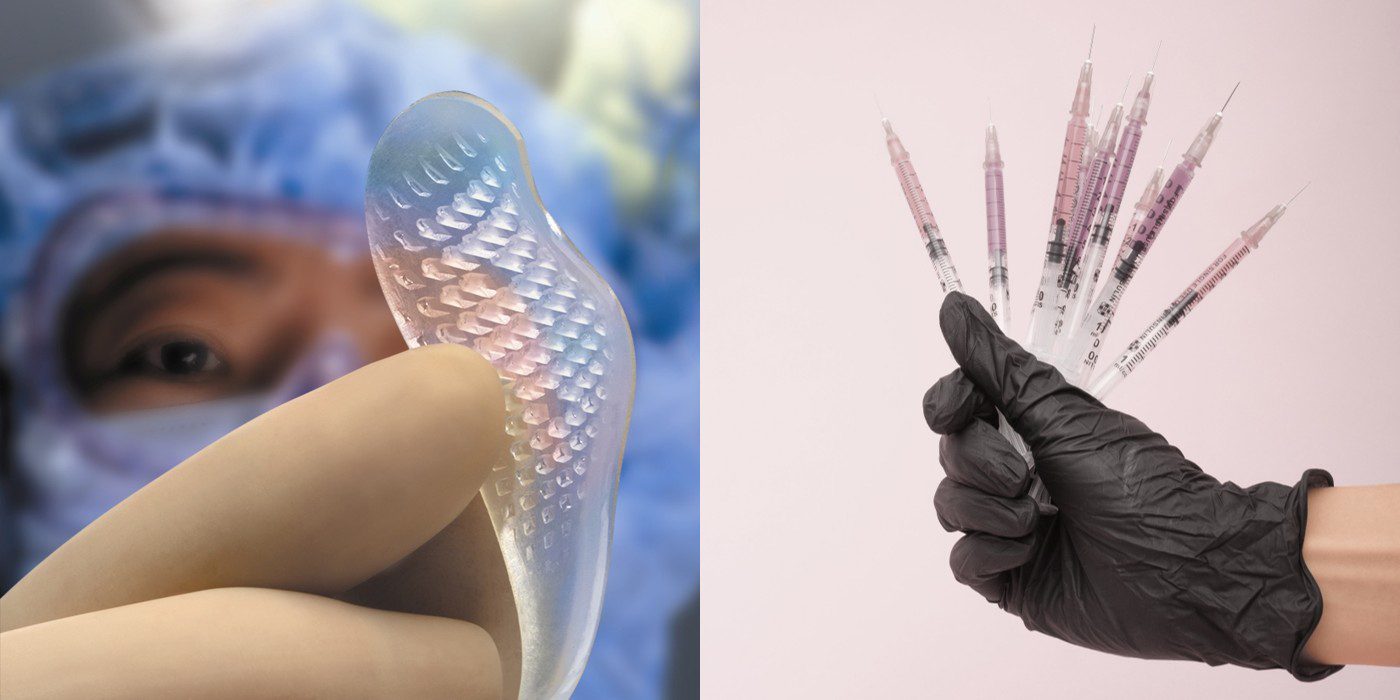
For these areas, facial implants made of supple silicone or expanded polytetrafluoroethylene (ePTFE) represent an excellent alternative.
Each implant is pre-formed for adding both shape and volume to a particular facial feature, providing the patient with a more aesthetic, youthful and balanced look.
For example, the aging face loses soft tissue below the cheeks. The Binder Submalar implant adds lower midfacial fulness while softening the nasolabial fold. Another version (the Binder Submalar II) fits more inferiorly into the submalar space to provide natural augmentation in patients with high cheekbones and sunken cheeks.
An additional notable area of concern for patients is that of the chin. According to the AAFPRS, “The shape of the chin has a remarkable influence on the overall appearance of the face and neck. Improving the shape of the chin can have positive effects on other areas that you might not anticipate.”3
In such cases, Implantech offers a variety of implants to overcome aesthetic challenges. Some chin implants are designed to add only anterior projection to the chin or lateral fullness to the pre-jowl sulcus. Others add both, while one even enables projection in all three planes (anterior, lateral and vertical).
Although Implantech’s silicone implants are available in a wide variety of styles and sizes, each is carvable to ensure a more patient-specific fit.
Certainly, a number of clinicians use dermal fillers to add volume to large facial areas. However, many doctors consider the use of implants to be advantageous over fillers.
For example, as noted by Francis R. Palmer, III, MD, “In my opinion, the permanent enhancement provided by a silastic chin implant is far more aesthetically effective, offers a more natural chin augmentation and is far more cost effective over the years compared to continued augmentation with dermal fillers.”4
Dr. Palmer further states, “In the hands of an experienced chin implant expert, this procedure is quick, extremely safe and highly effective such that it remains the ‘gold standard’ in chin augmentation…despite what you may have read or heard to the contrary.”4
As with any procedure, patients should consult with their physician when considering
their options. However, patients should also ensure that their physician offers the
relevant options—in this case, that means the ability to perform facial implant surgery as
well as to inject dermal fillers. This helps ensure an objective opinion regarding the most
appropriate course of aesthetic treatment.
1. Wysong, Ashley MD, MS; Joseph, Tim MD; Kim, David MS; Tang, Jean Y. MD, PhD; Gladstone, Hayes B. MD.
Quantifying Soft Tissue Loss in Facial Aging: A Study in Women Using Magnetic Resonance Imaging, Dermatologic
Surgery: December 2013 – Volume 39 – Issue 12 – p 1895-1902 doi: 10.1111/dsu.12362.
https://journals.lww.com/dermatologicsurgery/Abstract/2013/12000/Quantifying_Soft_Tissue_Loss_in_Facial_Aging__A.16.aspx
2. What are the risks of dermal fillers? https://www.plasticsurgery.org/cosmetic-procedures/dermal-fillers/safety
3. Chin Surgery. https://www.aafprs.org/Consumers/Procedures/FacialRejuvenation/Chin/A/FR2.aspx?hkey=decbf8fa1327-4e29-8d43-e97548eba8c3
4. Answer: Confused about chin implant VS fillers: what are the pros and cons of each?
https://www.realself.com/question/united-kingdom-confused-chin-implant-fillers